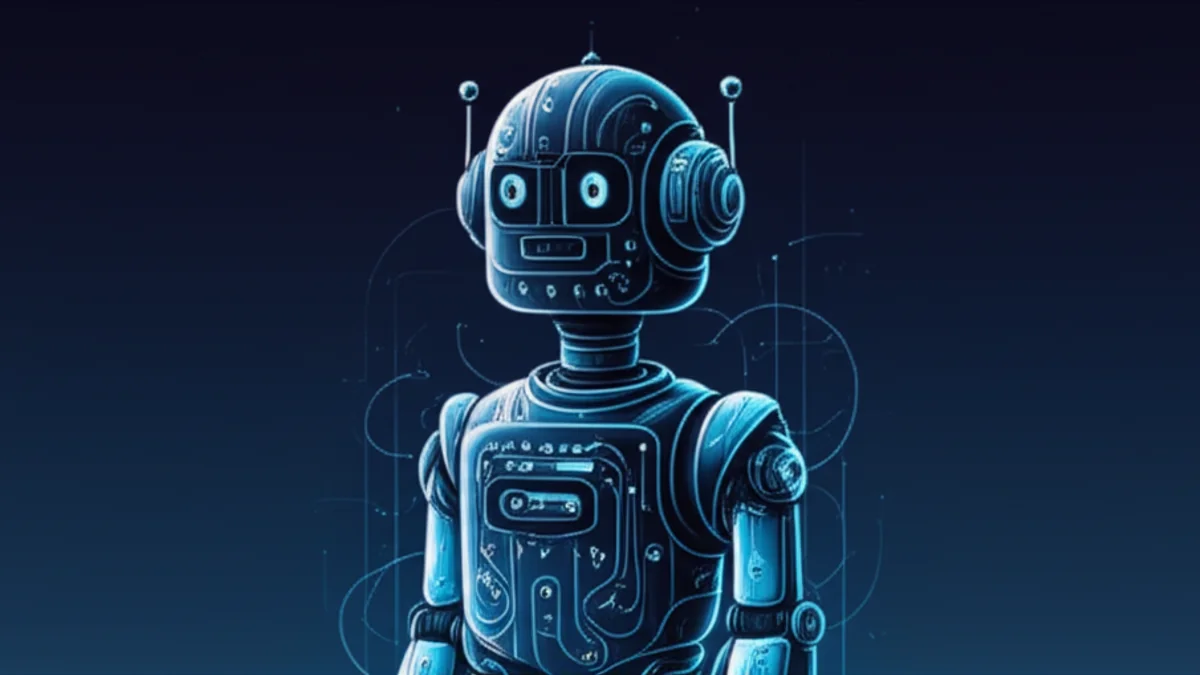
Building for AI Agents Changes Everything About Your Technical Skills
The shift isnt about learning to use AI—it's about learning to build for AI. That distinction changes everything.
Nino Chavez
Product Architect at commerce.com
For the past year, I’ve heard the same refrain in a thousand different meetings: “AI is not going to take your job, but a person using AI will.”
It’s comforting. It’s also dangerously incomplete.
The implication is that the core of our work remains the same—we just need to learn how to use a new tool, like a smarter version of spellcheck or a code completion assistant. After months of strategic work on the future of digital experiences, I’ve come to see this differently. The change coming for technologists isn’t about learning to use AI. It’s about learning to build for AI.
The New End-User
The next generation of digital interfaces won’t be exclusively for humans. Our new end-users are AI agents.
I keep turning this over in my head. It’s not a subtle shift—it’s a tectonic one. It demands a new way of thinking, a new set of design principles, and a new technical skill stack. The job description for every developer, designer, and product manager is being rewritten as we speak.
From Backend Developer to API Architect for Agents
For years, we built APIs for other developers. The new paradigm is building APIs for Large Language Models. An AI agent doesn’t care about RESTful principles if it can’t understand what an endpoint does.
The new skills I’m watching: writing crystal-clear, natural-language descriptions for every endpoint and parameter. Designing concise, context-relevant responses that don’t overwhelm an LLM’s context window. Exposing business logic as high-value, action-oriented tools agents can use to solve complex problems.
From SEO to Answer Engine Optimization
The game is no longer about getting a human to click a blue link. It’s about becoming the canonical, undisputed source of truth for an AI agent synthesizing from dozens of sources.
That means deep mastery of Schema.org and JSON-LD—going far beyond basic product schema. Content isn’t for reading anymore; it’s for parsing. Structure it in Q&A formats optimized for machine consumption and RAG.
From DevOps to Agentic Systems Orchestrator
The future isn’t a single monolithic AI—it’s a decentralized ecosystem of specialized agents collaborating. The new responsibility: implementing open standards for agent interoperability (MCP, A2A Protocol), building and managing tool registries and agent directories so agents can be discovered, published, and securely invoked.
What I’m Trying
I’ve started marking up pages so comprehensively that an AI could answer any question without ambiguity. Designing APIs where the documentation is written as if an LLM is the only user. Testing endpoints by asking an agent to use them. Reading the whitepapers for MCP and A2A to understand the problems they solve.
I’m not sure I’ve got this figured out. But I’m increasingly convinced that the conversation is shifting—and the question is whether to be part of it or watch it happen.
Originally Published on LinkedIn
This article was first published on my LinkedIn profile. Click below to view the original post and join the conversation.
View on LinkedIn