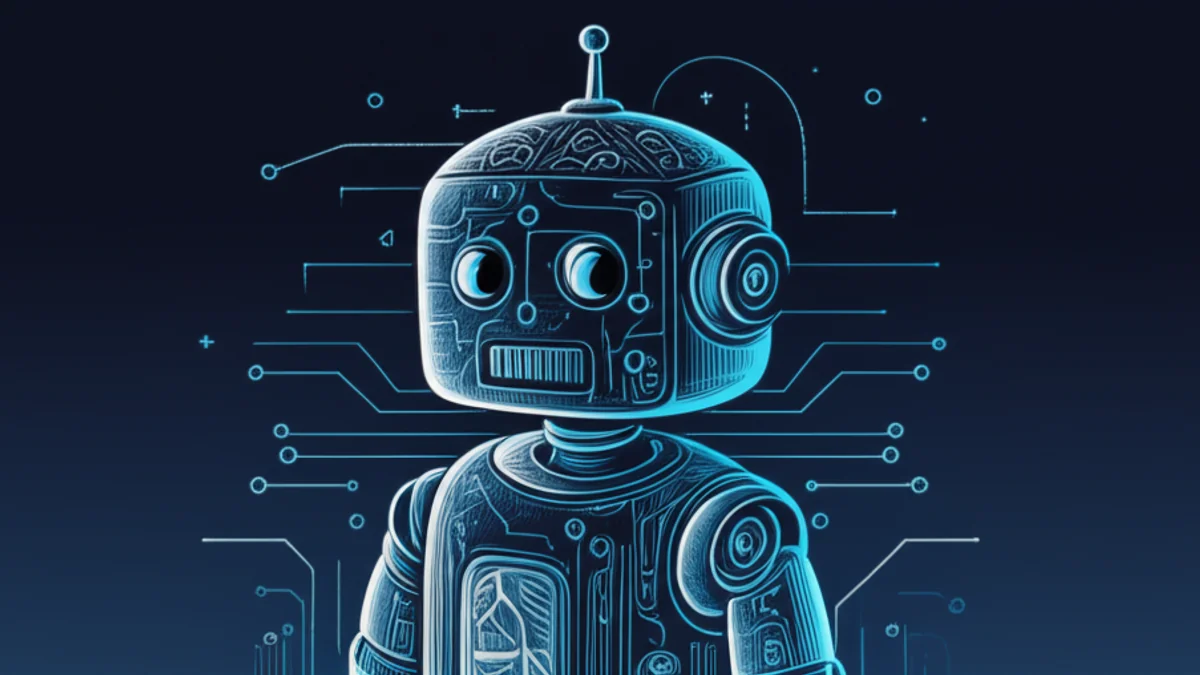
I Don't Trust My AI Agents, So I Build Them Cages
Agentic software is powerful, but it needs guardrails. Im finding the most important work isn't coding, but architecting the systems that constrain the code.
Nino Chavez
Product Architect at commerce.com
I have a team of AI agents that can take a project from idea to deployment. They write code, fix bugs, and manage their own workflows.
And I don’t trust them.
Not completely. How could I? They are immensely powerful, trained on a corpus of knowledge I can’t even comprehend, and capable of generating solutions I would never have imagined. They are also capable of confidently making terrible decisions, misunderstanding core business logic, and drifting away from the project’s soul.
This is the tension of agentic software. We want the autonomy, but we fear the chaos. In a previous post, I called the solution “building deterministic cages.” A nice, aggressive metaphor. But what does it actually look like in practice? What does it mean to build a cage for a large language model?
It’s not about writing better prompts. It’s about architecture.
The Bars of the Cage are Business Rules
I’m working on a project called AIQ. It’s an internal platform for consultants to measure how brands appear in AI-generated answers. The key words there are internal and consultants. It is not, and must never be, a self-service SaaS product.
Yet, an AI agent, tasked with creating a new dashboard, might reasonably conclude that adding a “Sign Up” button or a “Public Pricing Page” is a good idea. It’s a common pattern for web apps. It’s also a decision that would violate the core business model.
The cage, here, is a compliance framework baked into the agent’s operating system (.agent-os). It’s a set of markdown files that don’t just suggest, but enforce. One of the rules is an auto-rejection trigger: if any proposed code contains features like “client self-service signup flows” or “public subscription pricing pages,” the commit is automatically blocked.
That’s a bar on the cage. A hard constraint. The agent can be as creative as it wants within that constraint, but it cannot break it. It’s an intent firewall.
A Cage Can Be a Narrative
Another project, the Agentic Commerce Narrator, visualizes a massive knowledge graph. The temptation for any developer—human or AI—is to build a generic “graph explorer.” Let the user fly around, click on nodes, and filter relationships. It’s the default, logical solution.
It’s also the wrong one.
The entire point of that project is to guide the user through a specific story: the transition from traditional commerce to an AI-native model. The goal is signal, not noise.
So the cage is a narrative. The agent’s instructions explicitly forbid it from building a generic explorer. It’s forced to build what we call the “Narrative Cockpit.” The navigation must follow a strict hierarchy: Concept → Domain → Capability. The UI must be 80% focused on the comparison between the “traditional” and “agentic” states.
The agent isn’t free to build the most feature-rich tool. It is constrained to build the most purposeful one. The cage isn’t limiting its ability; it’s focusing it on the correct problem.
Is “Cage” the Right Word?
I keep using this aggressive term, and I wonder if it’s right. It feels restrictive, adversarial. Maybe these are less like cages and more like scaffolds. Or a foundry, where raw intelligence is poured into a specific shape.
I wrestle with this. Part of the promise of AI is emergent, unexpected behavior. Am I architecting that magic away? Am I just rebuilding traditional, process-heavy software engineering and sticking an “AI” label on it?
I don’t think so. Or at least, I hope not.
This isn’t about micro-managing the AI’s code. It’s about defining the problem space so tightly that the AI’s creativity is channeled toward the actual goal. It’s the difference between a firehose spraying wildly and a planned irrigation system delivering water exactly where it’s needed. The volume of water is the same, but the impact is worlds apart.
For now, this is the work that matters most. Not writing the code myself, but designing the systems that ensure the code written by my agents is the code that should be written. This is the new architecture. This is how I’m learning to sleep at night while the bots are committing to main.