Same Game, Different Sand
The best indoor player I ever coached couldn't pass a ball on sand. Same sport. Same skills. Completely different game. I'm living that transition right now.
Found in: Reflection, AI & Automation, Meta, Leadership, Insights, Reflections, Philosophy
The best indoor player I ever coached couldn't pass a ball on sand. Same sport. Same skills. Completely different game. I'm living that transition right now.
From wide-eyed optimism to 'the AI is gaslighting me with kindness.' A field guide to the emotional journey every AI adopter takes—and the sycophancy trap waiting at every stage.
Building with AI in public looks a lot like fitness content. I'm not sure how I feel about that.
Is a clock an asshole for telling you the time when you're late? The answer reveals something uncomfortable about how we receive honesty.
After 25 years bridging strategy to production, I still can't answer 'what do you do?' cleanly. That might be the point.
If I handed you my camera right now—same lens, same settings, same light—would you get the same shot? The tools are available to everyone. The output isn't.
I used to say 'just one more level' until 3am. Now I say 'just one more version.' The game changed. The compulsion didn't.
It's Thanksgiving. And while I'm grateful for the usual things—family, health, increasingly creative leftover sandwiches—I need to take a moment to thank the team that really made this year possible. They don't eat. They don't sleep. And they never ask for PTO.
Ive been wrestling with a question that won't let go: who's more valuable, me using the LLM or the people building it? After days of thinking, I realized I've been asking the wrong question entirely.
I'm not just paying for the service anymore. I'm doing the work. And somewhere between the self-checkout and the self-install kit, I stopped noticing when 'convenience' became unpaid labor.
I used to wear 'GSD' like a badge. But somewhere along the way, I realized my old mantra was creating the exact dependency I was supposed to prevent.
Awareness isn't the fix. It's just the ticket to the stadium. The real work is what comes after the breakthrough.
A field guide for countering common traps of misguided experience.
Meta-Companion to "Living The Gap"
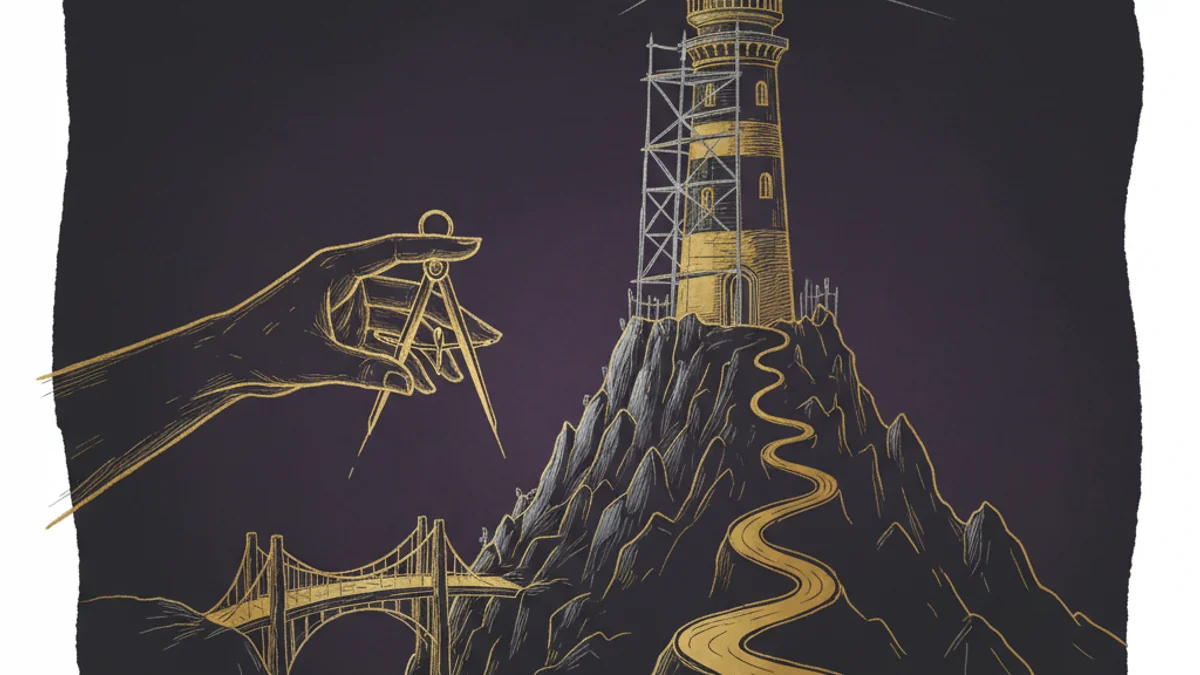
I live between presence and projection — here, but already ten steps ahead. It’s a tension of slowing down, waiting for others, holding the map while walking the same road. Leadership often means pacing yourself so we can arrive together.
After sprinting through two weeks of AI-coded progress—and crashing into drift, chaos, and broken trust—I reset everything. This is the story of slowing down, building real structure, and defining a repeatable AI‑Ops workflow. From vibe coding to teardown, here’s what I learned.
I built a production-grade React app—and still don’t fully understand JSX. In the AI-assisted era, syntax mastery matters less than system design. You’re not the coder anymore. You’re the architect. The real skill? Knowing what to ask, how to judge, and when the output doesn’t fit.
If your value lies in how you think, are you ever really off the clock? Lately, I’ve been chasing AI workflows at all hours—and thinking through systems even when I’m not at my keyboard. This post reflects on the cost of always being “on,” and how to protect the infrastructure: you.
How AI coding tools helped me beat the overhead wall — and build faster than I think.
This post is about that realization. About what happens when AI becomes the default reviewer, and starts learning from its own reflections. We’re not just debugging code anymore. We’re debugging the system that teaches itself how to review.
With AI development, waste isn’t hidden in team velocity or burndown charts — it’s itemized on your invoice. That’s not a flaw. It’s a feature.
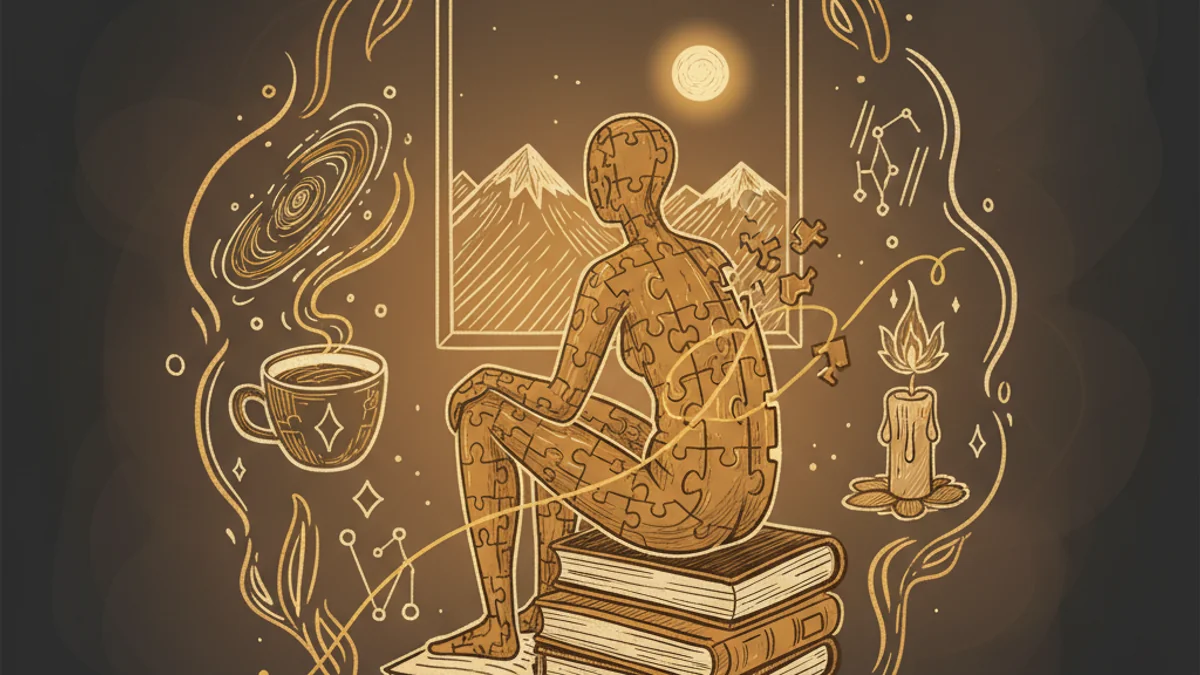
What happens when AI sharpens your mind, but drifts you further from those who don’t think that way? This post explores the private cost of clarity — and the quiet grief that comes from outgrowing the resolution your old relationships were built on.


The hidden cost of clarity in an AI-shaped mind
Dropped phone, lost life. Same test applies to corporate AI: if your copilots vanished tomorrow, would work even slow down? The “Lost-Phone Test” exposes integration gaps and makes the case for a Chief Intelligence Officer to weave tools into real workflows.
If you want to go fast, go alone; if you want to go far, go together
In my last post, I wrote about the shift from shutdown to speedrun — how we’ve had to adapt, over and over again, just to keep moving. First to survive the pandemic. Now to keep up with AI.
The Cost of Surviving the Age of Constant Upgrades
The page isn’t the enemy. The page is the gym. You don’t show up to look good. You show up to build grip. Form. Force. Reps. That’s how the voice gets real.
One of the easiest traps to fall into as a leader or expert is assuming we already understand. That assumption — even when subtle — shuts down curiosity, slows progress, and can quietly place the burden of clarity on everyone but ourselves.
Hard‑won patterns sound like wisdom—until they echo so loudly you miss new ideas. This month I learned: AI model tuning isn’t just prompting, shutter‑speed instincts fail at 60 fps video, and Figma spacing ≠ CSS. Beginner reps, reverse mentorship, and stranger audits keep the channel clear.
Even when I’m not trying to posture, sometimes it feels like the platform does it for me. This is about the moment when sharing something honest starts to feel like a performance — and how I’m trying to stay grounded in signal, not spectacle.
What if you're not here to capture the moment—but to be the aperture it passes through?
You don’t have to be the thread. Or the pattern. Just be the thing that lets it all come together.
Every tech revolution builds a fast market—and leaves a mess. Cleanup becomes its own economy: FinOps, platform teams, and second-wave consultants turning v1 chaos into stability. The real money? It's in making things actually work.
I’ve been writing and thinking so much about how I think, it’s started to shape my real-life conversations — sometimes in ways that feel disconnected. When does thoughtful reflection cross the line into sermonizing? And how do we find balance between clarity and presence?
I’ve heard people describe me in ways I barely recognize. At first, it felt like they were talking about someone else. But now I’m wondering—what if they’re seeing something I haven’t figured out how to see in myself?
This post was already about self-doubt. So writing it with an AI didn’t make it easier—it made the mirror sharper.
Sometimes I’m not writing for clarity. I’m writing to defend myself against a comment that hasn’t been written yet.
Getting sharper comes at a cost. The more refined your thinking becomes, the more you risk drifting into isolation. This post explores the hidden tax of clarity—and what it means to stay reachable without dumbing yourself down.
I don’t chase tools anymore. If it fights my instincts or adds ceremony, I’m out. If it sharpens my clarity, it stays. That’s the filter.
I didn’t set out to write about personal growth. I just wanted to get clearer. But writing about other things helped me finally put into words a shift I’ve been feeling for years—that sometimes growth changes how you see the world before you even realize it.
As your work gets more refined, it risks losing the texture that made it real. But if you do it right, refinement doesn’t erase your voice—it reveals it.
Your writing gets sharper. Your thinking gets clearer. Your tone gets cleaner. But somewhere along the way, you wonder if the people who liked the messy version of you still recognize the voice.
When I started this blog, someone close to me asked, “What are you doing with this?” Not my photography. Not my DJ mixes. Just this. I’ve been thinking about why.
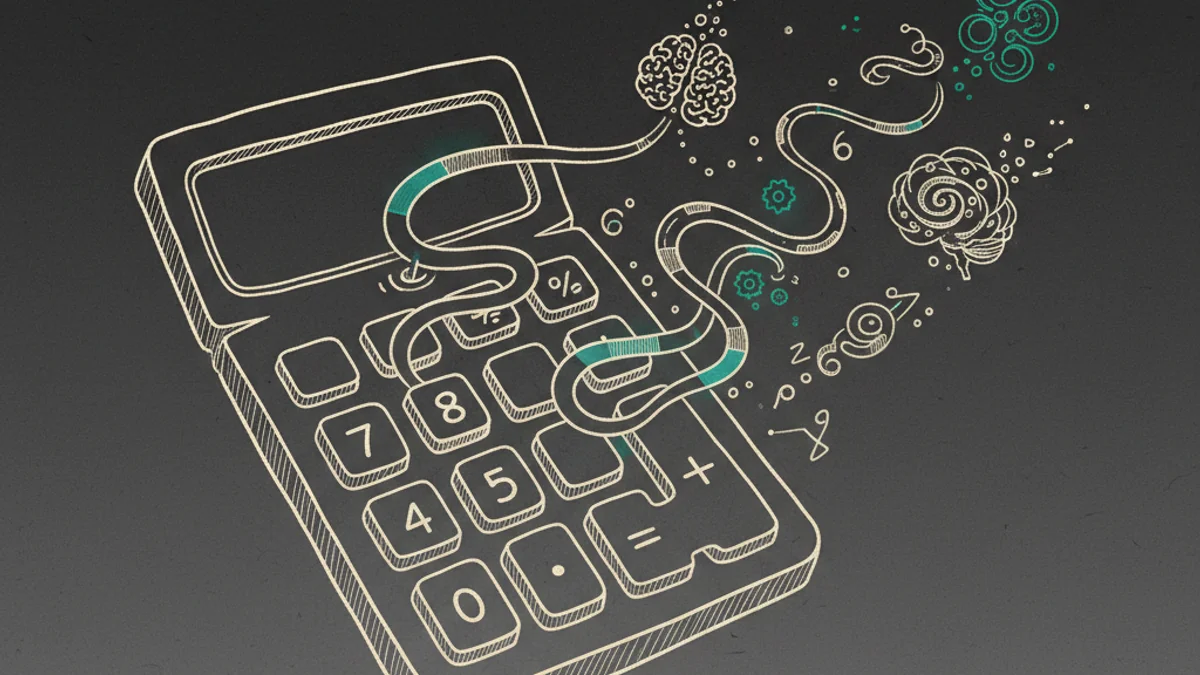
I started checking the calculator even when I already knew the answer. Not because I needed it—because I didn’t trust myself. That’s the part that stuck with me. Not the math. The muscle I stopped using.
This thing can write a clean draft faster than I can finish my coffee. But then I read it back and think—did *I* even say that? Or did I just agree with it because it sounded smart? That’s the trap.
It starts small. A pause before spelling rhythm. Letting the GPS run when you already know the way. That pause? It used to be fluency. Now it’s drift.
The hardest part of writing isn’t writing—it’s sticking with your own thoughts long enough to figure out what you’re really trying to say. AI makes that part go away. Which is the problem.
Every tool starts off helpful. Then it gets easy. Then it becomes default. And if you’re not careful, default turns into dependency. That’s the moment to pay attention to.
Sometimes I think I’m hearing subtle signals that no one else picks up. Other times, I wonder if I’m just hallucinating signals to feel smart.
The story that you’re too damaged to change is just another form of avoidance. False exemption doesn’t always sound like pride—it often sounds like hopelessness. But even if you’re not to blame for how the storm started, you’re still responsible for how you move through it.
False exemption often hides behind logic. We convince ourselves that the strategy is valid, the tool makes sense—but not for someone like me. This isn’t ignorance. It’s identity-protection dressed up as reason.
Choosing growth isn’t just about courage. It’s about cost. To change, you have to give something up—comfort, certainty, even identity. And deep down, many of us decide we’d rather stay soaked.
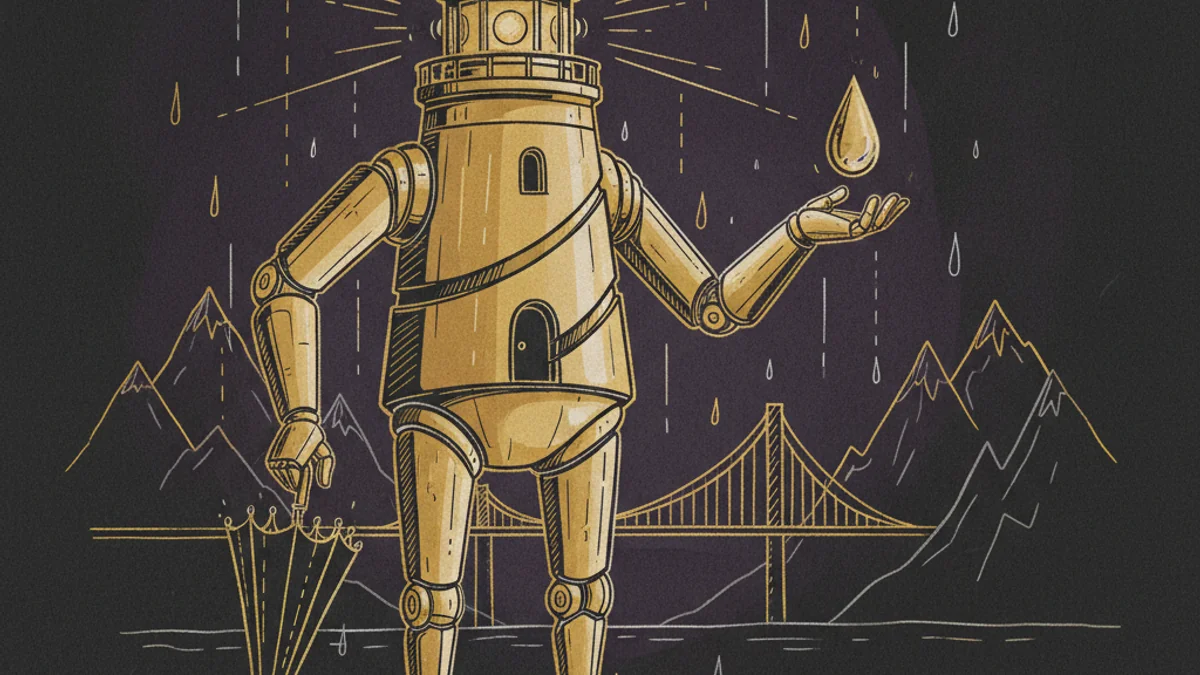
This isn’t about people who don’t know better. It’s about people who do. Who see the storm coming, feel the weight of the umbrella in their hand… and still stand there, getting soaked.
A structured index of essays and field notes from Signal Dispatch. Organized by theme and series
Some choices don’t reveal their full meaning until much later. It’s not that the decision was wrong—it’s that the person you become after making it sees things differently.
Signal Reflex isn’t a beginning. It’s a different lens. For years, my photos have shown how I see the world. Now I’m sharing how I think—and what that reveals about how I lead, learn, and grow.
I didn’t use AI to go faster—I used it to catch up with myself. This blog is where that journey turned into something useful and real.
This wasn’t meant to be a thought leadership series. It started as a phone call—and a question: Where does AI actually help, right now, for real? I’m Not Hyping AI. I’m Just Using It.
This started as a rant while driving. A reminder that no matter how much structure we build, growth still happens on its own terms. In club volleyball and in life—you can’t engineer the outcome. You can only build the conditions.
Flickday started as a nod to “almost Friday.” Now it’s my creative safe space—a place to stay playful, go off-script, and build with others beyond the Nino Chavez brand.
Photography is the clearest signal I know. I don’t shoot for content—I shoot to stay connected to the part of me that still notices the small stuff.
I don't move to be seen. I move when it matters. My personal philosophy is about recognizing signal, trusting pattern, and acting with intent.
I lead with clarity and calm—not noise. Sometimes that looks like being the one who steadies the room. That’s why they call me Uncle Nino.
Senior Night hits different. It’s not just a ceremony—it’s a goodbye. I shoot it like it matters, because for most people in the gym, it does.
I didn’t start writing to build an audience. I started because AI helped me get past the blank page. This is where I work through what matters—before it fades.
Signal Reflex isn’t a brand or a content engine. It’s where I write to stay clear, present, and honest—using AI to reduce drag, not replace thinking.