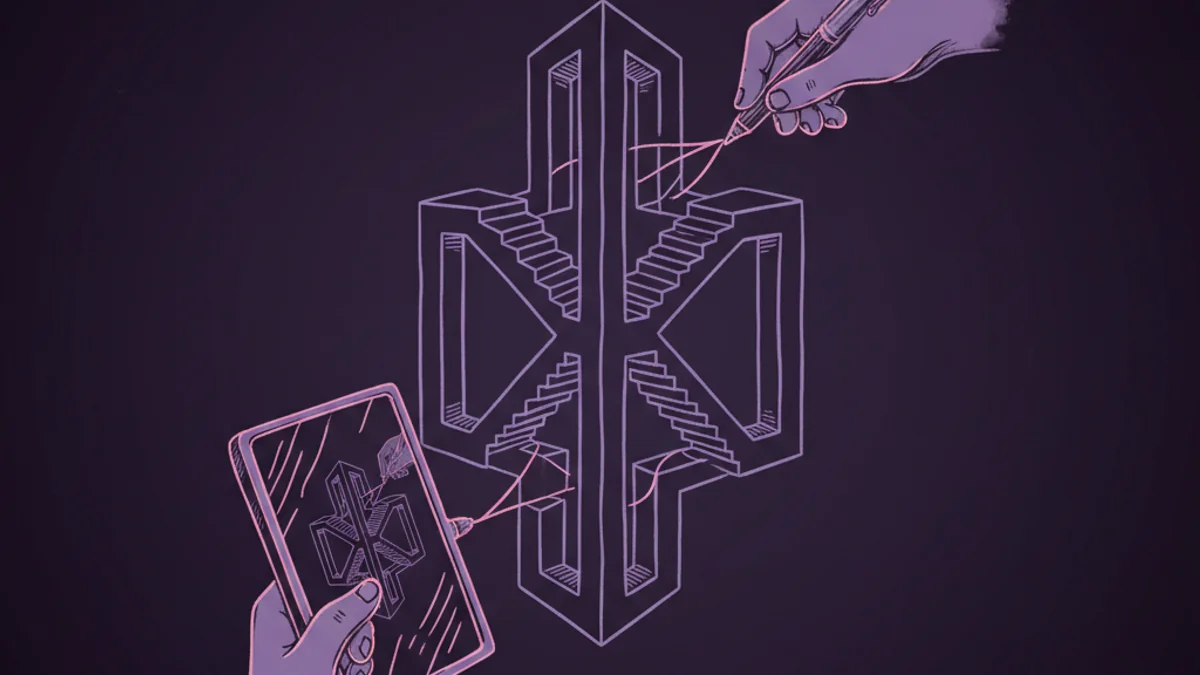
The Posture Problem
Awareness isn't the fix. It's just the ticket to the stadium. The real work is what comes after the breakthrough.
Nino Chavez
Product Architect at commerce.com
Why does the “aha” moment feel so useless?
You have the breakthrough in therapy. You see the pattern. You get it. You finally understand why you do the thing you do.
And then, an hour later, you’re doing it again.
I used to think the realization was the fix. That awareness was 90% of the battle. I’m starting to believe awareness is just the ticket to the stadium. It doesn’t mean you’ve played the game—it just means you’re finally allowed inside to watch.
The real work is what comes next. I think.
It’s Like Having Bad Posture
I had a breakthrough today. Not about what my pattern is, but about what the work of fixing it actually looks like.
It’s like having bad posture.
You know you’re slouching. You know what “sitting up straight” feels like. The tool is simple: just sit up.
But 30 seconds later, you’re slouching again. Not because you forgot how to sit up, but because your muscles have decades of training. Your default state is the slouch. The path of least resistance leads back to the problem.
The “fix” isn’t the moment you realize you have bad posture. The “fix” is the million tiny, conscious, annoying corrections.
Shoulders back.
…
Okay, I’m slouching again. Shoulders back.
…
Aaaand I’m slouching. Core tight. Shoulders back.
This isn’t a problem of knowledge. It’s a problem of muscle memory.
The Myth of the Automatic Fix
Here’s the trap I keep falling into: I accept the tool. I hold the umbrella. I understand the fix.
But I’m furious I have to keep holding it.
We want the breakthrough to be a software patch. We want the insight to permanently update our code, so the new, better behavior just auto-executes.
We want to know we should sit up straight, and then have our body just… do it.
And we get frustrated when it doesn’t. We mistake the need for repetition as failure. “I’m still doing this? The therapy isn’t working. I’m not working.”
But what if the work isn’t the revelation?
What if the work is just… the tedium?
The Dumbbell, Not the Wand
The breakthrough, for me, was accepting the nature of the tool.
The tool for my mental health isn’t a magic wand. It’s a dumbbell. The insight doesn’t change me; it just shows me which muscle to work out.
And the work is doing the reps. Over and over. Without drama. Without the movie montage.
It’s the unglamorous, iterative, day-in-day-out process of building new neurological muscle memory. It’s noticing the slouch and, without judgment, just… sitting up straight. Again.
The goal isn’t to “be fixed.”
The goal is to get faster at the correction. To shorten the gap between the stimulus and the new response. To go from slouching for an hour, to ten minutes, to 30 seconds.
Maybe the “aha” moment doesn’t solve the problem. Maybe it just tells you which dumbbell to pick up.
The rest of it?
That’s still the part I’m figuring out.