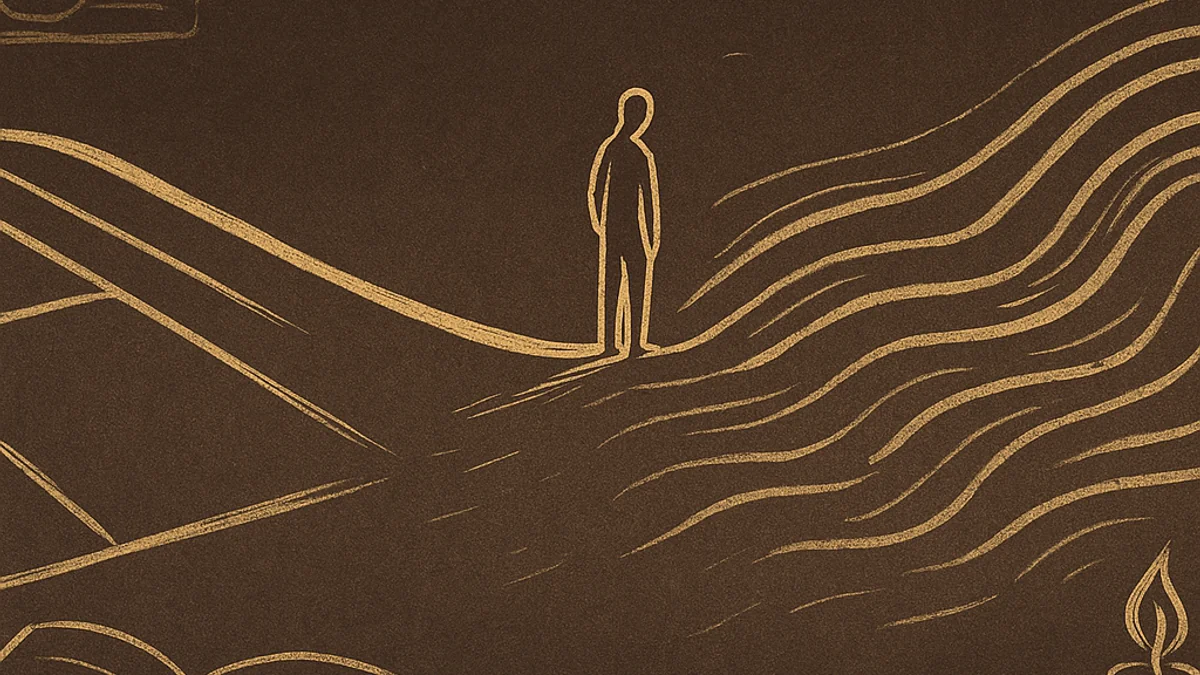
Same Game, Different Sand
The best indoor player I ever coached couldn't pass a ball on sand. Same sport. Same skills. Completely different game. I'm living that transition right now.
Nino Chavez
Product Architect at commerce.com
The best indoor player I ever coached couldn’t pass a ball on sand.
She had everything. Touch, timing, court vision. Indoor, she ran the offense like she owned it. Coaches loved her. Other kids watched her warm up and you could see them recalculate their own ceiling.
Then we took her to the beach.
The Sand Changes Everything
I used to coach youth volleyball—indoor and beach programs, sometimes overlapping rosters. On paper, it’s the same sport. You pass, set, hit. The net’s the same height. The ball’s the same ball.
But the sand changes everything.
Indoors, you have six players, specialized rotations, and a hard floor that gives back what you put in. You plant, you explode, the physics are clean. Beach? Two players. No substitutions. The ground absorbs your effort. Every jump costs more. Every movement is heavier. The strategy compresses—you can’t hide behind a system when there’s only two of you on a side.
The talented indoor kids would come out to beach and just… struggle. Not because they lacked skill. Because the skills they’d built were calibrated for a different surface. Their footwork was wrong. Their timing was off. Their instincts—the ones that made them dominant indoors—kept firing for a game that wasn’t quite this one.
And here’s the part that fascinated me as a coach: the ones who pushed through weren’t always the most talented.
They were the most ambitious.
”Do I Hate This, or Am I Just Bad at It Right Now?”
There’s a specific internal negotiation that happens when a competent person is suddenly not competent.
I watched it play out in 14-year-olds, and it was brutal in its honesty. Some kids would come off the sand after a rough session and say, “I don’t think beach is for me.” Others would come off just as frustrated but ask, “When’s the next practice?”
Same experience. Same discomfort. Completely different response.
The ones who quit weren’t lazy. They were protecting something—their identity as a good player. The sand threatened that. And the easiest way to neutralize a threat to your identity is to reject the thing causing it.
I don’t dislike this. I’m just uncomfortable.
That distinction is everything. But you can’t always see it clearly when you’re in it.
Talent gets you to the court. Ambition is what keeps you on the sand when the sand is working against you.
New Title, New Terrain
I’ve been thinking about this a lot lately because I’m living my own version of it.
I recently moved from enterprise architect at Accenture to product architect at BigCommerce. On paper, it’s the same game. Architecture is architecture. Systems thinking, tradeoff analysis, stakeholder alignment—these don’t change because the logo on your laptop changed.
But the sand is different.
At Accenture, the surface was consulting. Large clients, complex transformations, advisory relationships. You’re brought in as the expert. The value you deliver is clarity in chaos—reading a situation, mapping it, giving the client a path forward. The terrain rewarded pattern recognition across many contexts. Breadth was the asset.
At BigCommerce, the surface is product. One platform, deep ownership, long-term bets. Nobody’s hiring you to parachute in with a recommendation. You are the system. The terrain rewards depth, iteration, living with the consequences of your own decisions over months and years instead of moving on to the next engagement.
Same skills. Different physics.
The Recalibration
The first few weeks of any transition like this are disorienting in a way that’s hard to describe to people who haven’t been through it.
You know you’re capable. You have the reps. You’ve done hard things in complex environments. But your instincts keep firing for the old game.
In consulting, I’d read a room and think: What does this client need to hear right now? In product, the question is different: What does this system need to become over the next quarter? One is responsive. The other is generative. Both require intelligence. But the muscle memory is different.
I catch myself reaching for consulting reflexes—wanting to frame everything as a recommendation, wanting to present options with a clear “here’s what I’d do.” Product doesn’t always work that way. Sometimes you’re not advising. You’re deciding. And then you’re living with it.
That’s the recalibration. It’s not about acquiring new skills. It’s about re-tuning existing ones for a surface that responds differently.
What Ambition Actually Looks Like Here
Back to those volleyball kids.
The ones who made the transition successfully did something counterintuitive: they let themselves be bad at it. They stopped trying to play indoor volleyball on sand and started learning beach volleyball as its own thing.
That’s what ambition looks like when talent isn’t enough. It’s not grinding harder. It’s releasing your grip on the version of yourself that was good at the old thing long enough to become a beginner at the new thing.
I’m trying to do that now.
Some days I’m that kid walking off the sand, wondering if product is for me. Other days I’m asking when’s the next practice. The ratio is shifting—more of the latter, less of the former—but both still show up.
The difference between me now and those kids is that I’ve seen this pattern before. I’ve watched it from the coach’s side. I know that the discomfort isn’t a signal to leave. It’s the tax you pay for operating on new terrain while your instincts catch up.
Still on the Sand
I don’t have a clean ending for this because I’m still in it.
What I know is that talent—real, demonstrated, verified talent—is not the thing that carries you across a transition. It gets you in the door. It gives you credibility. But it doesn’t keep you from feeling like a beginner when the ground shifts.
Ambition does that. Not the loud kind. Not the LinkedIn-post-about-my-journey kind. The quiet kind. The kind that makes you show up to a sand court you haven’t figured out yet, knowing you’re going to look worse than you’re used to looking.
I’m still figuring out my footwork on this new surface. The jumps still cost more than I expect. But the game is starting to feel less foreign and more like something I’m choosing.
That matters more than being good at it right now.