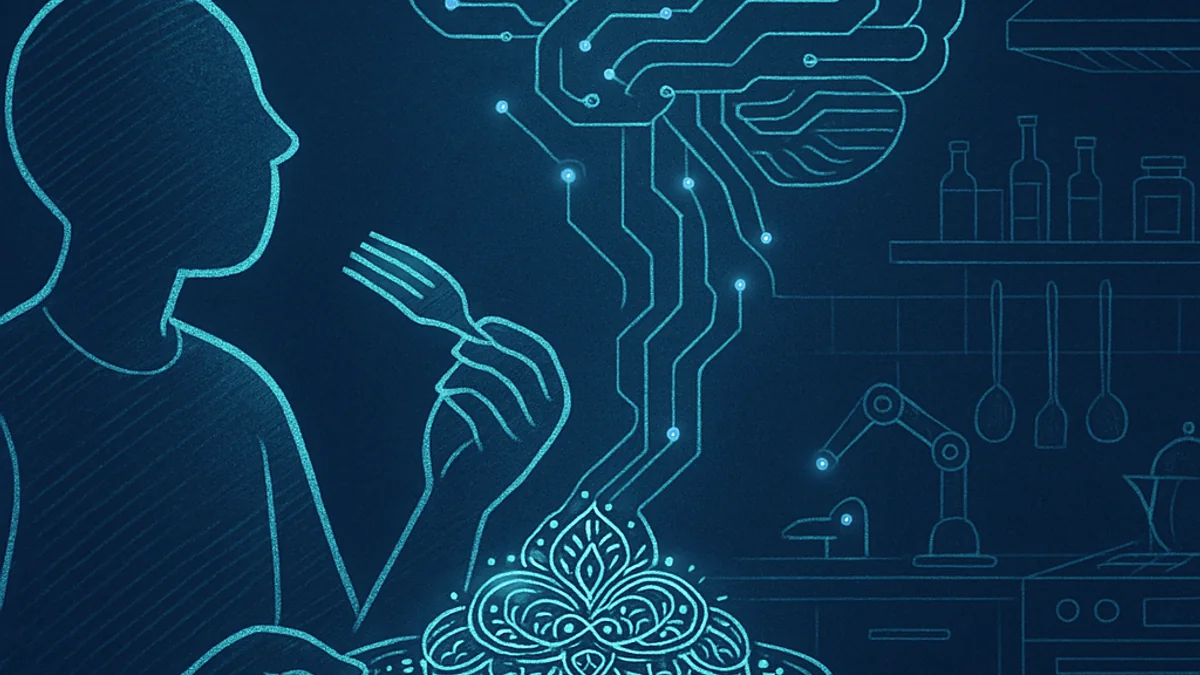
The MasterChef Problem
AI gave everyone a professional kitchen. But MasterChef didn't make chefs by handing out equipment — it made them by designing challenges that exposed who could actually cook. Digital product development is missing the challenges.
Nino Chavez
Product Architect at commerce.com
I keep watching people build things with AI and feeling two contradictory things at the same time.
The first: genuine excitement. People who couldn’t ship a product six months ago are shipping products. The barrier didn’t just lower — it evaporated. Someone with a clear idea and a weekend can now produce something that would’ve taken a team three months in 2023.
The second: a creeping unease. Because a lot of what’s getting shipped is the software equivalent of a beautifully plated dish that tastes like nothing.
And I couldn’t figure out why that bothered me until I thought about a cooking show.
Everyone Gets a Kitchen
Here’s the premise of MasterChef, stripped to its essentials: take amateur home cooks, put them in a professional kitchen, and see who emerges as someone who can actually cook — not just follow a recipe, but understand heat, balance flavor, adapt when things go sideways, and plate something that makes a judge stop mid-bite.
The show doesn’t work because of the kitchen. Every contestant gets the same equipment. Same convection ovens. Same knives. Same pantry.
The show works because of the challenges.
Mystery Box. Skills Test. Team Challenge. Pressure Test. Each one is designed to reveal something specific — creativity under constraint, mastery of fundamentals, ability to coordinate, composure when the plan falls apart.
Take away the challenges and you just have twenty people in a nice kitchen making whatever they want. Some of it would be great. Most of it would be forgettable. And nobody would learn anything about who they actually are as cooks.
That’s where we are right now with AI-assisted building.
Everyone got the kitchen. Nobody designed the challenges.
The Mystery Box Isn’t About the Ingredients
The Mystery Box round is the one that separates people fastest. You lift the lid, you see what you’ve got — sometimes it’s wagyu and truffles, sometimes it’s canned sardines and a mango — and you have sixty minutes to make something that works.
The constraint is the point. Not the obstacle to work around — the thing that makes the work meaningful.
This maps to something I’ve been noticing in AI-native development. The builders who produce genuinely good work aren’t the ones with unlimited context windows and the best models. They’re the ones who can work when the prompt doesn’t land. When the generated code is 70% right and the last 30% requires understanding why it’s wrong. When the tool hallucinates a dependency that doesn’t exist and you have to recognize the hallucination before it becomes architecture.
The Mystery Box tests whether you can look at imperfect ingredients and see a dish. Not the ideal dish — a possible dish.
I watch people bounce off AI tools constantly. “It didn’t give me what I wanted.” OK. But did you know what to do with what it did give you? Could you look at the 70% and see the path to 100%? Or did you need the machine to hand you the finished plate?
The Skills Test Doesn’t Care How You Got Here
There’s a round on MasterChef where they test a single skill in isolation. Fillet a fish. Temper chocolate. Make puff pastry from scratch. No creativity required. Just execution.
It’s brutal because you can’t hide.
You can have incredible instincts, a killer palate, a beautiful aesthetic — but if you can’t break down a protein without mangling it, the judges see it immediately. The skill either exists in your hands or it doesn’t.
I’ve been writing about taste and judgment as the differentiating skills in this era. But taste is the refined version. Before taste, there’s something more basic: can you read?
Not read documentation. Read generated output. Can you look at a function an AI wrote and know — without running it, without tests, just from reading — whether it handles the edge case that matters for your specific use case?
That’s the skills test. And I keep meeting people who’ve been building with AI for months and still can’t do it. Not because they’re not smart. Because nobody told them this was the skill they needed to develop. They thought the skill was prompting.
Prompting is choosing your ingredients. Reading the output is knife work. One is creative. The other is non-negotiable.
The Team Challenge Is Where It All Falls Apart
The episodes I find most revealing are the team challenges. Two brigades. One menu. Sixty covers. Someone has to run the pass.
Every season, the same thing happens: a group of individually talented cooks collapses the moment they have to coordinate. Someone overcooks the protein. Someone falls behind on sauces. The person running the pass either micromanages every station or disappears entirely. And the whole service grinds to a halt.
Individual skill is necessary. It’s not sufficient.
This is the part of AI-native development that almost nobody talks about. Because right now, the narrative is about individual empowerment. One person, one AI, infinite leverage. And that’s real — for solo projects, for prototypes, for weekend builds.
But the moment you introduce a second human — or a second agent — the coordination problem shows up. And it’s the same coordination problem it’s always been.
- Who reviews what the AI produced?
- Who decides which generated approach to use when two are valid?
- Who catches the drift when the codebase grows and the AI’s context can’t hold all of it?
- Who calls tickets when the kitchen gets hot?
I run into this in my own work. I can build faster than ever. But the moment I’m working with someone else — even an AI agent with a different context window — the bottleneck isn’t generation. It’s alignment. Making sure we’re building the same dish, not just cooking in parallel.
The Ramsay Function
Gordon Ramsay’s role on the show is simple: he doesn’t care how you made it.
He doesn’t care if you followed a recipe or improvised. Doesn’t care if you trained at Le Cordon Bleu or learned from YouTube. Doesn’t care about your process, your intentions, your backstory. He tastes the dish. It’s either good or it isn’t.
The market works the same way.
“But the AI wrote it” is not a defense for a product that doesn’t work. Neither is “I built this in a weekend” — which, increasingly, people say as if speed were a quality signal instead of just… a speed signal.
The Ramsay function is the thing that’s missing from most AI-assisted building right now. Not because there aren’t critics — there are plenty. But because the speed of generation is outpacing the speed of honest evaluation. People ship and move on before the dish has been tasted properly.
In a professional kitchen, the pass exists for a reason. Every plate gets checked before it leaves. Not because the cooks are incompetent — because even competent cooks make mistakes under pressure, and the system accounts for that.
Where’s the pass in AI-native development?
What I Think Is Actually Needed
I don’t think the answer is gatekeeping. MasterChef doesn’t lock the kitchen. It opens the kitchen and designs the pressure.
What I keep circling back to is structure. Not “AI courses” — we have plenty of those. Not certifications or bootcamps or LinkedIn Learning paths. Something closer to what the show actually does:
Constrained challenges. Build something real with a limited toolset. Not “use AI to build anything you want” but “here’s a broken codebase, a 4,000-token context window, and two hours — make it work.” The constraint reveals the skill.
Isolated fundamentals. Practice the unglamorous part. Read AI-generated code without running it. Predict what it’ll do wrong. Identify the hallucination before the tests do. This is boring. It’s also the skill that separates people who build things that work from people who build things that demo well.
Forced coordination. Build with other people. Build with multiple agents. Discover the communication overhead. Learn that the hard part isn’t making a component — it’s making a component that fits with the six other components someone else’s AI just generated.
The Season Isn’t Over
I’ve been thinking about this through the lens of my own practice. The governance frameworks, the structured reviews, the linter-bots I build to police AI output — those are my version of the skills test. The multi-agent pipelines where I’m trying to get different tools to produce coherent results — that’s the team challenge. The moments when I look at something an AI generated and think this is technically fine but it’s not right — that’s the Mystery Box instinct, knowing what a good dish looks like even when the ingredients are unfamiliar.
None of that came from prompting better. It came from cooking more. Cooking badly, sometimes. Plating things I wasn’t proud of. Getting the equivalent of Ramsay staring at my dish and saying “it’s raw.”
The question I keep sitting with: how do we build those reps into the way people learn AI-native development? Not as optional enrichment. As the main thing.
Because right now, we gave twenty million people a professional kitchen and said “go cook.” Some of them are producing incredible food. Most of them are producing beautiful plates that taste like nothing.
The kitchen was never the bottleneck. The challenges were.