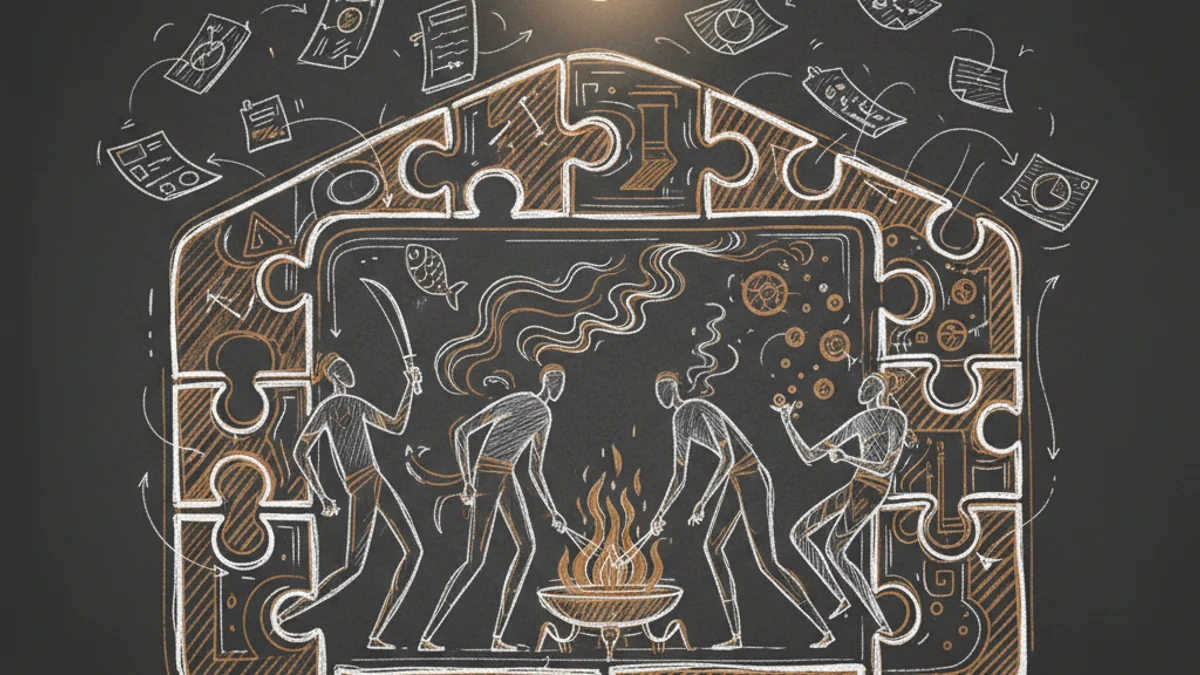
The Kitchen I'm Looking For
I don't need more Salesmen. I need a Sushi Master, a Pitmaster, and a Molecular Gastronomist. AI lets us return to the Guild—craftspeople in their own lanes, augmenting their own mastery.
Nino Chavez
Product Architect at commerce.com
A few days ago I wrote about the tragedy of the timesheet—the slow death of the consulting model that bills for hours instead of outcomes. The Salesman fading into obsolescence while the Builder rises.
That post was a diagnosis. This one is about what I actually want instead.
Because the deeper angst isn’t that the old model is dying. It’s that I’m looking for people to build the new one with.
The Loneliness of the Builder
Here’s the part I didn’t fully articulate before: I want more people like me around.
Not exactly like me. Not clones running the same playbook. But people operating with the same intensity in their own lanes. People who care about the craft of what they produce—not the performance of producing it.
I’ve been trying to name this for months. And the metaphor that finally clicked is a kitchen.
Not a corporate cafeteria. A real kitchen. The kind where the chef sweating over the reduction to your left has spent fifteen years perfecting sauces. The sommelier knows every vineyard in Burgundy. The pâtissier can tell you why your macarons cracked and how the humidity affected the meringue.
These people don’t need to be “well-liked” in the Willy Loman sense. They don’t need to schmooze. The work speaks. The dish is either good or it isn’t.
There’s nowhere to hide.
The Factory vs. The Kitchen
The consulting firm I described in the last post operates like a factory.
Interchangeable generalists. Pyramid hierarchies where juniors feed seniors who feed partners. The output is slides—promises of future value. The business model requires bodies on benches, hours logged, utilization tracked. AI threatens this model because it collapses the pyramid. If AI can do what the analysts do, what are you billing for?
The kitchen operates on opposite principles.
Distinct specialists. Parallel stations working toward a shared plate. The output isn’t a promise—it’s the dish. Immediate. Consumable. Undeniable. And AI doesn’t threaten this model. It enhances it. AI becomes the sous-chef handling the prep work—the chopping, the data cleaning, the formatting—so the chef can focus on the cooking.
The factory fears AI because it exposes how much of the work was theater.
The kitchen welcomes AI because it removes the friction from craft.
Spiky Profiles
In the corporate consulting world, success comes from being “well-rounded.” Safe. Politically navigable. Good at everything, threatening at nothing.
But the kitchen wants something different. It wants what you might call spiky profiles.
A person who’s top 1% at data architecture but maybe terrible at writing emails.
A person who’s a genius at UX design but hates project management.
A person who can taste a wine and tell you the exact terroir, but couldn’t manage a meeting to save their life.
In the past, these people failed as independents. They couldn’t handle the parts of the business they weren’t good at—the sales, the admin, the endless coordination. Their spikes got sanded down by the demands of self-employment, or they retreated into large organizations where their edges could be managed.
AI changes the equation.
The genius architect uses AI to write their emails. The designer uses AI to manage their schedule. The sommelier uses AI to handle the invoicing. They can stay purely in their zone—their lane—and use AI to fill in the divots.
The spiky profile becomes viable. Maybe even optimal.
The Cuisines
Here’s where the metaphor expands. Because I’m not just looking for other chefs. I’m looking for other cuisines.
If I’m the French Chef—rooted in technique, structure, integration, the hierarchy of flavors—I don’t need more French Chefs. I need masters of disciplines I don’t have.
The Sushi Master. The data purist. Extreme precision. Minimalism. If the fish is bad, there’s nowhere to hide—no heavy sauce to cover mistakes. This is your backend architect. They care about clean pipelines and data integrity. They don’t care about the “story.” They care that the knife cut is perfect.
The Texas Pitmaster. The culture and ops builder. Low and slow. Fire and smoke. You can’t rush a brisket with a microwave. This is the person who understands that you can’t deploy an AI agent into an organization overnight. They manage the heat—employee anxiety—and the fuel—cultural buy-in. They understand organizational digestion.
The Molecular Gastronomist. The R&D innovator. Spherification, liquid nitrogen, edible foam. Breaking the laws of physics. It might look weird, but it’s the future. This is your creative technologist. They’re playing with models that came out yesterday. Not always stable. But pushing boundaries that the rest of us will eventually cross.
The Pâtissier. The UX architect. Exact chemistry. Aesthetics. Fragility. If you’re one degree off, the soufflé collapses. This is the person who ensures the interface is beautiful and intuitive. They translate the complex logic of the backend into something the client actually wants to touch.
None of these people are trying to be each other. They’re not generalists hedging their bets. They’ve committed to a lane and gone deep.
The Guild Model
What I’m describing isn’t a firm. It’s a Guild.
In the Middle Ages, you didn’t hire a “Construction Corporation” to build a cathedral. You hired a Master Mason, who brought in a Master Carpenter, who brought in a Master Glazier. They operated in their own lanes. They shared a goal. But they maintained their own craft.
AI allows us to return to this.
You don’t need a 500-person firm anymore. You need a table of five high-agency operators:
- The Head Chef (strategy and vision): Sets the menu.
- The Sommelier (data and backend): Knows where everything is stored and how to pair it.
- The Line Cook (agent orchestration): Doesn’t code the app—codes the agents that code the app.
- The Maître d’ (frontend and UX): The interface the client actually touches.
- The Expeditor (AI coordination layer): The pass where all the dishes come together before they go out.
This is the anti-Loman structure. Willy failed because he tried to be everything to everyone, armed with nothing but personality. This model succeeds because it relies on tangible competency.
The chef doesn’t need to “sell” the steak if the steak is perfect.
The Pass
In a traditional kitchen, “the pass” is the table between the kitchen and the dining room where plates are assembled, inspected, and sent out. It’s where the chaos of multiple stations converges into a coherent experience for the guest.
In this model, AI is the pass.
It’s the translation layer between specialists who would otherwise need project managers and coordinators to communicate.
The Sushi Master outputs a raw data schema. An AI agent translates that into a strategic dashboard for the French Chef. The French Chef refines the strategy. An AI agent converts that into wireframes for the Pâtissier.
Each person stays in their lane. AI handles the handoffs. The dish arrives at the table without requiring a dozen status meetings to get there.
Why This Matters to Me
I wrote a few weeks ago about being lonely. About being the only node connecting clusters that don’t talk to each other. About wanting to find a room where AI-native velocity is baseline, not exceptional.
This is what I meant.
I’m not looking for employees. I’m not looking to build an agency. I’m looking for a cast. A collective of people who are autonomous—own their lane—highly skilled—specialized cuisine—and use AI not to fake work, but to remove the friction that prevents them from cooking.
The angst I’ve been carrying isn’t just frustration with the old model. It’s the friction of trying to find these other artisans. Most people are still trying to be Salesmen. Still optimizing for presence over output. Still producing slides instead of dishes.
I’m looking for the ones who are obsessed with the craft of the output. The ones who’d rather ship something real than perform the act of shipping.
The Table I’m Setting
So what does this look like in practice?
I don’t know yet. I’m still finding the other chefs.
But a few things are becoming clear:
Outcomes over hours. The table doesn’t charge by how long it took to cook. It charges for the meal. Value-based pricing. The client pays for the $10M problem solved, not the time logged.
Lanes over roles. No one here is a “consultant.” Everyone has a cuisine. A craft. A specific thing they’re world-class at. The lanes are distinct. The coordination is AI-augmented.
Craft over performance. The dish is the proof. No one needs to perform credibility when the steak is on the plate.
Trust over schmooze. The relationships in this model aren’t built on golf outings and conference dinners. They’re built on shipping together. On mutual respect for craft. On knowing that when the Sushi Master says the data is clean, it’s clean.
The Question
I keep asking myself: where are the other chefs?
Not the ones who claim to be. The ones who actually are. The ones who’ve committed to a lane and gone so deep that they can taste when something is off. The ones who use AI to accelerate their craft, not to pretend they have one.
If you’re building this way—not as a solo operator, but as part of a potential guild—I want to know.
The kitchen isn’t built yet. But I’m collecting the cast.